Let’s cut straight to it, education, what should we teach our children and how? It's a doggy question to many and a straightforward one to some. With that may I ask, have you ever solved a 17 by 17 by 17 Rubik's Cube before? Probably not, in fact to tell the truth I can’t even solve the simple 3 by 3 by 3 one. In some cases I’d rather peel the colored stickers off and rearrange them and call it a day. In the real world however you can’t really do that with most things. In the real world if you try to teach or educate a person attempting to maneuver your way around it your going to end up with a mess. Regardless, in solving such a puzzle, you'll begin to realize it can be solved in multiple ways. There is no one solution much like how there is no one way to mess up the cube in the first place. A child when debuted upon this earth is more or less the same: different from every other human being. So how and what do you teach a child when every kid is different? Like the cube, there is more than one way to get to the answer.
Entering the U.S. raised many questions for my parents, but of all the concern they had their primary concern became me. This was an extraordinary opportunity, coming from a third world country to a first world country, jumping two worlds ahead, I would be exposed to one of the wealthiest highest forms of education, or at least that’s how my parents saw it at first. In reality, coming to the U.S. had its issue as well as its peaks.
One thing that was a sure bet about school was that it offered me a temporary refuge from staying home alone in the morning. My parents worked during the morning, afternoon, and night and could not afford a babysitter to watch me. That pilled with the fact that we got robbed the first day that we moved in, it wouldn't be such a wise choice to leave a young six- year -old unattended. So it became obligatory for my parents to take me to work consisting of cleaning large buildings varying on a day to day basis. Janitor stuff basically. It was under this strange circumstance of bringing a six-year-old to a vast empty company building, with nothing to do except homework, that led to the idea of my parents homeschooling me about the various untouched subjects in school I would not see in years to come. And so it became this fascinating mixture of school by day, and mini homeschool by night. In a way, it corrected the wrongs of the educational system. The extra knowledge also made me look like a smartass in front of the teacher from time to time.
To be fair to my parents for homeschooling me, I was one grade behind, well not technically. The American educational system is much different than other school systems in the world. In Peru, I was one grade behind meaning I should have graduated by the age of seventeen and in some cases even sixteen which is crazy for American standards which are eighteen or nineteen, but that was the custom. My parents never got used to it, so they took it upon themselves to teach me as much so that I could to eventually skip a grade and be back on track.
Coming from a family of doctors, biologists, statisticians, and mathematicians, it became a challenge to my parents where to start. I think the answer for them came naturally. One day, my mom and I took a break to have lunch on some woodland area off the side of the building we were cleaning. The scene looked something out of a cliche movie. It was bright, lush, and sunny, but most important of all animals were scouring about in the distance. I don’t know what clicked for my mom but, It was at that point that she began reciting Noah’s arc. She talked about God and destiny, and it all shook my imagination but what struck me the most was the concept of God. It stuck with me like a chip on my shoulders. The thought that God was somewhat narcissistic, bipolar, and omniscient fascinated my young mind every second. Most important of all I could never see God. How can you prove he is real then?
Almost every day we started cleaning I would bug my mom about God, and she would begin to teach me about the bible. Though we didn’t have a physical Bible that didn’t stop my mom. She had learned the Bible by heart for almost ten years of her youth. It was the culture in Peru, and it felt like passing on a tradition. Sometimes word for word or through a quick summary, my mom told me every story from that book while she was picking trash from bins or dusting off desks. The physical movement provided excitement for both her and me as she told scripture. She sometimes smashed the trash bins together when someone died, or would scurry our huge garbage bin we dragged around to show a chase. It was in some ways a form of dramatizing some of the Bible’s most climatic moments. Putting both action and story together made the event cinematic and thrilling. It was the only thing that piqued my interest in those days, all these complex stories fascinated me, and some of them began to form a meaning or a good lesson that could apply to my everyday life. Those “lessons” gave me a foundation of a lot of things mainly the concept of good and evil. When the stories came to an end I became lost within the massive buildings we cleaned sometimes pondering what we had conversed and other times wasting new packages of Windex bottles pretending they were guns.
My homeschooling education could’ve have come to an end had it been not for my father who was a geek for movies and rented a very very very very small film one day. As the night grew through our daily routine, I went into a presentation room with a projector hanging from the ceiling that could read DVDs. I made a makeshift bed out of two chairs and my backpack as a pillow and buried my hand into the handful of movies that we rented a while ago from the BlockBuster and out came this movie. I didn’t think much of the cover, it looked weird but curiosity sprung so off it went into the DVD player. I dimmed the lights and got a plastic wine bottle from the conference room filled with water. I set the mood. As the menu screen passed by I remember viewing a black screen for what seemed like forever with eerie background music creeping on at me. Then, silence. The film began showing a shot of a plain desert then an ape appeared. The film grabbed me from the shot of the ape. I had never seen an ape till then, so it was fascinating. Music started to pour in as the apes gathered around this black square shape in the middle of the set. It scared me, but I didn’t look away, I couldn’t look away. After the apes came humans, spaceships, and towards the end a giant fetus floating around in space! Many questions rose within my head and so when the picture came to a halt surrounding me in pure darkness and silence signaling my time to sleep. I opened the door to the hallway illuminating me and the whole room and went looking for my dad. I couldn’t for the love of god remember the title of the movie, so I took the cover with me. It read Stanley Kubrick’s 2001: A Space Odyssey.
This segment of my homeschooling journey consisted of evolution, the one thing that defies the bible. What’s comical to me is that I would learn this from my dad opposite to my mom who was a biologist. A biologist, someone who has studied evolution can you imagine that! Regardless I had questions, and my dad needed something to keep him awake past midnight, so he began teaching me evolution but not in a list of facts but like a story much like the bible. He started telling me that there was nothing and then all of a sudden there was something and then so on and so forth, the first chemicals on the earth, the first organisms, apes, humans, and present times. He finished his tale sometime around 4 in the morning. As he spelled his last utterance I felt tiny, but a kind of tiny that I was scared to be in and excited to see what would happen.
I hated the feeling of not knowing everything yet I adored it. It gave me purpose, so much so that I kept bothering my dad who told me to ask my mom, who she explained and then told me to ask my dad, and so on and so forth as a game of ping pong. Slowly, the more I asked, the more they settled on their roles as teachers. My mom would teach me biology, whether it be the human body, dinosaurs, dogs, or other animals. Opposing her my dad would teach me about math from algebra to calculus. Nothing became boring to me. It all somehow connected. Every subject, every detail, every small little thing helped me paint a big picture. That Rubix cube that began as a mess came to have form and through the years a solution. Not a clear one by any means but something great began to take shape, and it made love learning more than anything.
If you'd probably gotten frustrated in solving the Rubix cube or any puzzle, in general, you’ve probably done what millions of people across the globe do. Google it! The answer has to be out there right? There has to be some universal way of knowing how to solve it or at least guide you towards that goal. In America, we do much of the same thing to our students. We give a checklist, a curriculum, rules, and then we wait for them to accomplish them and hope for the best. This is the compulsory education system. Students need to show their knowledge of a class through test scores which result in a letter grade. Then you complete certain credits to pass on to the next grade, and then need to take different classes that range from anything to writing to chemistry, astrology, economics, statistics... Etc. By the end of it, however, do you really take an interest in these subjects? Probably not. Though the opportunities to learn a variety of subject is impressive this system through time has turned more into a machine of check listing things off for the sake of passing. One may wonder how the hell did we get to this?
One word: The American Pioneer. The idea of manifest destiny consuming the American public, persisting through the civil war, turned many Americans into pioneers to explore the vast unknown and conquer it. In some way, one could say that the idea of American colonialism returned and with it the idea of homeschooling. As vast towns and eventually settlements arose the concept of a public school arose with it but became vastly different from the compulsory system. Instead originated this idea of a more unified school system that was practical and efficient and in some cases emphasized religion through bible studies. This is what would be later remembered as the “one-room school.”
It became common to have such one-room schools in settlements mainly for its practicality, effectiveness, and unity between the teacher and the student. Many classrooms consisted of young pioneers who all gathered much like a sermon with the teacher being a former student him/herself. The one on one contact is what many Americans would later in time recall as the humble beginnings of the public education system. Unlike its counterpart - the compulsory school system -the one-room school was not required by law or regulated by law. In this case, the one-room school system was free and more expressive in its teaching style. The one-room school system slowly evolved later to be the idea that the lesson, should revolve around the student, not the other way around.
The idea of the one-room school system is how I was taught, by family members, teachers who understood the student best. This is something that the compulsory system doesn’t acknowledge knowing the student. Sometimes the system much like a machine is programmed to do what you tell it to do and not what you want it to do. In such cases, you recieve people who haven’t learned anything at all and who are bored at education. The compulsory system gets worse as it progresses to more modern inner city schools which are comprised of a collective of different races, backgrounds, and social issues. Those children who are condemned to go through the system end up not really knowing anything due to the fact that the material they learn is in no way shape or form connecting to their situation or problems. In other words, they are not learning what they want or need, they are learning what other people think they want and need. In such cases, there rises from time and time a sort of triumphant story where it challenges the system and people in a way rebel against it.
In the year 1994, a young twenty-three-year-old white teacher by the name of Erin Gruwell came through the doors of Woodrow Wilson High School in Long Beach, California to teach her very first class. This high school due to integration laws consisted of everyone: Asians, Hispanics, African Americans. Everyone came in condensed into one classroom. Most of these kids came with histories of gang violence, family disturbances, drug addictions, etc. it was basically an assortment of everything wrong in today's modern society. More importantly, they hated each other, who could blame them when most of them grew up with a mentality to watch out for their own and never really got an authentic opportunity to know another person besides their skin color. When Gruwell began to teach, nobody gave a damn about her and insulted her at every turn. With her being new, inexperienced and not knowing any better she followed precisely what the system commanded her checking off the list and nothing more.
Gruwell could have ended it there just obeying the system and letting these kids go to the next grade level without knowing anything, but like any great story, something happened one day. She bursted! After inspecting a note from a student depicting a racist drawing of an African American with big lips, she lost it. She grabbed the class’s attention and popped angrily at why this drawing was inappropriate. She told them they were mimicking Nazi propaganda. Everyone fell silent. They puzzled at her, not of guilt but of confusion. She asked if anyone knew what the Holocaust was, nobody, answered. It was the first time that the kids of Woodrow Wilson High School couldn’t respond back with an insult. It was at that moment that things changed for Gruwell and her students. She changed her entire curriculum to tolerance and began to teach the class about literary works that focused on tolerance. They started to read World War II stories such as The Diary of Anne Frank. Many students began to see the injustices done by the Nazis and related that deeply into how they were treated at school, at home, or on the streets. They like the Jews were victims: of oppression, of racism, or of gang violence. Gruwell finally got to them and could not stop there.
Things like new books did not come cheap. The school would not pay for new books since previous students would treat books harshly showing their disgust at the education system. Gruwell, however, saw that there could be change and pocketed her money to buy new books for the classroom, and then took it a step further to organize field trips, and then guest speakers consisting of Holocaust survivors who wanted to tell their stories to the young crowd. Gruwell would have to work multiple jobs to raise the money, but if it meant she could reach to her students, it was worth it. In several months time, these stories got these young group of individuals to learn far more than anyone could have imagined. They could relate to these stories, and for some of them, these stories had taught them literature, and history for the first time in their lives. Students began to get along with each other breaking up years of tension and finally uniting them.
What served as the icing on the cake for the class came in the form of an empty journal Gruwell had assigned to every student encouraging them to write every day about anything. Gruwell promised that she would not read any journal without the student’s permission, and with that, an incredible thing happened. Every student began to write about their personal lives; all the messed up stuff that you hear in movies and read on the papers was written in those journals, and it helped them. Writing in the journals became much like a self-reflection at every student prompting them to analyze who they were and to do better. Gruwell would be so impressed and heart filled by every page in every journal that she assigned everyone to type them out to be all collected in a book. The title of the book would come from a documentary the students watched about the 1960s freedom riders and decided it best reflected them. Gruwell would publish The Freedom Writers book in 1999 many years after she left Woodrow Wilson High School.
Gruwell would eventually get permission to keep continuing to teach the same class of individuals throughout their whole high school career and finally once the original freshman class that she had been assigned to graduated, Gruwell quit her job and founded the Freedom Writers Foundation. A group that would encourage the methods Gurwell used on her students to teach others. If this all sounds too good to be true it's not. This is by far the the most cliche thing to have happen. The stereotypical white teacher that changes everyone. Goes to show that Cliches exist for a reason.
All these subjects of interest are fascinating and all but they aren’t the only thing that educators should focus on. There was a tough time in my adolescence as I am sure you have probably had. Mine came in surviving. After a series of unfortunate events, it was only my mom and me. The hard yet exhilarating adventures we have had as janitors came to a close. She grew older and quit the janitoring job we have had for so many years. I as well compose myself more than the former six- year- old I was and became busy with school work. The tough time came for me at an unexpected turn. After learning that my mom had a tumor, I knew everything would be alright. That’s not the tough time, that’s just context. The tough time came after the successful operation. To save a couple bucks my mom decide to go home the day of the operation. She came to me more hurt, tired, and comedic than usual. She lied in her bed which back then was nothing more than a comfy couch. She smiled, knowing very well that I had to take care of her for the next coming weeks. This meant to cook, to clean, to pay bills, to drive her, and so much more. I had to basically suck my pride in and grow up. Thing is I had no idea how to do any of these things. I was screwed.
The first day was the hardest. The alarm consisted of her loud yell for breakfast. I had never cooked in my life. I went to the kitchen and just stood there. She told me to grab some eggs and crack them open and began to guide me step by step on how to cook breakfast. Of all the messed up stuff that I did to the poor kitchen, I will tell you only this. By the end of that first day, I had blown the microwave to a pure black crisp. Smoke poured everywhere as I pulled the handle making the smoke detector beep hysterically. My mother’s laughter triumph over the whole ordeal making it more of a good laugh than a defeat.
The next days got better, after following her instructions more carefully I had successfully managed to make rice the next day without blowing anything up. The next day, I boiled water, the next, I cooked steak, and the next, I cooked rice with steak. It was a tedious process, but like a good student, I had progressed significantly to a point where my mother took a risk. Two weeks in my mother called me to open a drawer, and in it, I found a journal with an old picture of Donald the Duck on the cover. It looked as tattered and old as anything I could’ve ever imagined. She told me to open it, to find recipes and notes. Dozens upon dozens, of dishes that I had no idea existed. She explained it was from my grandmother and told me to pick a recipe and cook it. Nervously, I picked a random page and followed the instructions. I guided my self through the maze of drawers and cabinets, some that I didn’t even know existed. I grabbed spices, herbs; you name it. As I turn up the stove ready to cook the meat that had defrosted the night before, excitement and fear poured heavily. I take the meat and slap it onto a pan and begin. For a few minutes I feel like a chemist, and as I work my way into the meat I feel like a surgeon, and as the hot oil spits at me from the pan I duck for cover but come back to face it tenfold.
Eventually, a dish is cooked and rested upon my mother’s lap. As she takes the first bite, fear runs through and then she loves it. I had finally succeeded! I finally conquer my fear of the kitchen. I feel a brief moment of triumph then she says “You have to do the taxes.” I begin to panic, but she calms me down to settle me through the motions. As she tells me to grab a massive binder from one of the shelves, she begins to eat studying me. The binder settles, and out flings pay stubs, papers, and a small calculator. Just like the cooking, she starts to laugh through the process and begins to teach the student once again.
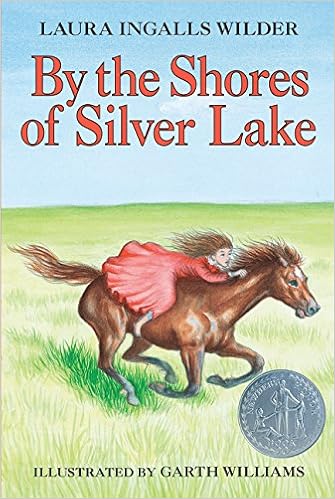 During this segment of my life, I realize I had never learned how to survive within the world but had learned everything else. Knowing how to survive is in it of itself an educational experience and one that we undermine in its worth. It can be fun to learn basic things in life. Back when my parents were janitors, I was going to the bathroom to brush for the night and I notice a book in one of the trash cans. As I pick it up the title reads By the Shores of Silver Lake by Laura Ingalls it fascinates me for a moment with the western look and feel of the cover depicting a young girl on an horse. It felt as if though I struck gold. As my mom came after me telling me, “don’t forget to floss” she sees the book and begins to smile, “wow I remember when I read those” and resides her explanation telling me to read it and nothing more.
After I brushed my teeth, found an office, and put two chairs together, I begin Laura’s journey. I would later find out more about her as I read. She was much like any child born on earth making her day view on February 7, 1867. She was born destined to what seemed like to be a very typical American life if it wasn’t for her father Charles Ingalls whom she called Pa. He was an ambitious man in the sense that he hated the city and wanted to venture into the unknown into uncharted territories. Contrasting Pa was Laura's mother Caroline Ingalls whom she called Ma. Ma wanted to live peacefully in a settled country and was a former school teacher. Regardless of the matter, the Ingalls family moved with their two daughters and eventually four, westward in 1868.

With their wagon, the Ingalls traversed the prairie continually moving and rarely staying in one place for too long. With that came Laura's extraordinary education, much like me she had an unorthodox education. What was taught to her was not math or science but rather how to live in the wild country that laid ahead of her. She was taught various farm duties, how to ration, how to ride horses, how to read, how to write, and taught scripture from the bible. It seems strange to a modern audience like us to say that's nothing to learn for the sheer fact that it looks simplistic but do you know how to raise a farm, how to ride a horse, or how to grow crops successfully for seasons to come. You may have heard the science behind it but do you really know? For me, I could’ve never done the things that Laura was taught for the sheer fact that we live in different times with different technologies. Regardless the things taught to Laura were back in its day as important as me learning how to find the area of a triangle. Why? After my curiosity peaked as I meticulously slipped the last pages of the book I realized that it what was merely a cultural tradition.
It was expected of a woman or any child during this time to know such things since their father before them and so on where colonists that were in the same conditions as their future generations. Every child knew that they would have to learn these things eventually and since there was nothing else to learn such as math or science which was in a sense restricted to a privileged few, these skills where what existed. Though they sound tedious to us, for Laura it was an incredible experience; She took advantage of these small little skills or tasks and made them into unforgettable memories. Her first time on a train holding her blind sister by the hand taught her to brave and embrace new technologies. And all that time on Silver Lake, though cruel, was an unforgettable journey. To add on to this her parents where her teachers and made every new experience or lesson fun and meaningful. Laura Ingalls was in any sense of the matter a Pioneer. We in our modern day society with such technologies would probably not be willing to learn what she has. In Laura's case, her education revolved around basic survival essentials. Though boring, she showed many that you can go live your life to the fullest on the most basic of things.
There isn’t one single way to educate a child. The Rubix cube you try to solve will always lead you to different ways you didn’t think. American education can vary in many ways depending on how you decide to take it. One way to start could be through interest. A lot of the subjects that interest us, revolve around curiosity and stories. Stories that grip us every day, that make us ponder on for hours on end. The fact that these stories seem very straightforward to us now was not the case when we first learned about them. In some way, they were different from what we have learned throughout our entire lives. They introduced a new concept that we found difficult to understand yet and the same time were not tedious or frustrating. They are masked in mystery that makes us want to solve it for the sake of knowing the answer. Sometimes the answer explains everything or leads to more questions pushing the individual who reads the story to marvel at it again and again.
Stories also serve a very fundamental purpose in our culture. To teach a lesson. Story and myths get passed down due to their awe factor but also because of what they mean and what they represent. The story of Icarus for example; You know this story as it is such a simple story. Icarus and his father are trapped in a tower, the father makes a set of wings to escape, both he and his father escape, father tells Icarus not to fly too high or his wings will melt, and he does just that. You could leave the story there and call it a day, but if you look beyond that, you see a tale of a father worrying about the new found freedom that his son has obtained and gives him advice so that he does not tumble at the hands of his own freedom. The tale of Icarus in this circumstances become something of a parenting lesson; listen to your parents.
I learned about math, biology, evolution, and religion all through stories that peaked my curiosity. First from Noah’s ark to 2001: A Space Odyssey I could tell more tales. The Freedom Writers as well learned to read and write because of stories. If it weren’t for their curiosity about the Nazi party the students at Woodrow Wilson High school may have never seen graduation. But they did, and through it, all became better students and individuals.
Surely curiosity and stories are one way to guide us into a direction of molding education to fit around the student. But what of simple things such as survival skills? I’m not saying you should learn to hunt a bear but rather simple things such as cooking, driving, doing your taxes. Such things are not included in any curriculum and don’t fit in so easy with curiosity. Such things sound boring to us and simplistic. Yet we don’t know some of these basic functions. We live in such a complex society that undermines such functions and praises more complex subjects that triumph over them. Reading about WWII may be exciting, but it won’t help you learn how to cook. Solving a set of equations won’t help you to calculate your taxes either. It’s fun learning subjects of interest, but it won’t help you live.
It is up to the educator to teach these subjects out of basic need to let any individual survive in the modern world. This doesn’t mean however those things can be boring but rather quite the opposite. Like Laura who learned how to ride horseback, go on a train, or leaned how to plant crops, it was an adventure every day for her. Though Laura was out in the wild and could roam freely making the experience breathtaking, it can be just as fun anywhere. During my mother’s recuperation from her surgery, I learned to finally grow up and do things I’d never imagined I could. Sure they were simple, but they were experiences that I still to this day remember. Perhaps it was the comical mistakes I made or my mother’s sense of humor and charisma but something clicked within that small one bedroom apartment, and it worked.
I could go on telling you more about different ways of learning, how to teach, other possible methods, and that’s all fine and all, but it's time to converse about the big elephant in the room. The educator, the person, who teaches the student. No great method can work without a great educator. If it weren’t for my mother and father’s way explaining things by stories I would have probably ended up hating everything I had learned. It would have been like reading a textbook. Instead, I got stories told by some of the greatest storytellers that I’ve ever known. For Gruwell, though she was not a storyteller she new that these World War II stories gripped these young kids and knew it was the right move to make them read about them. Then she pushed things forwards by making them reflect their feelings onto a piece of paper. She got them to open up because she knew the right buttons to press and continued to support her students by working multiple jobs and raising money for books and other activities. She believed in them and took an extra step.
With this in mind perhaps any boring method can be turned into a life-changing experience with the right educator. The time I spent alone with my mother recuperating was some of the best moments of my life. I came out a changed and grown man. She knew she needed to make it exciting and to make my mistakes look comical and not a disappointing event. For Laura, her Pa and Ma constantly went hands-on with everything telling her not just stories about themselves that were captivating but made the best out of every adventure by making the experience a family moment.
When it comes down to it, there is no one way to teach a person, nor what to teach them. You might end up with something completely different than what you expected. With a great educator that is willing to invest their time to understand the student and not the system, they can be able to break away from it. If they care about their student’s success, it's up to them to make something click within that individual and never let go of it and keep reinforcing it by adding more and more. A great educator could be the first step to break away from mechanical the compulsory system. It can come in many forms, from your actual teacher to your professor, to maybe even a stranger on the bus who wants to share a tale, it might even be you.


No comments:
Post a Comment